Biography
I am a Senior Staff Machine Learning Scientist in the Core AI team at Seeing Machines, specializing in human-centered 3D perception for Physical AI, robotics, and safety-critical systems.
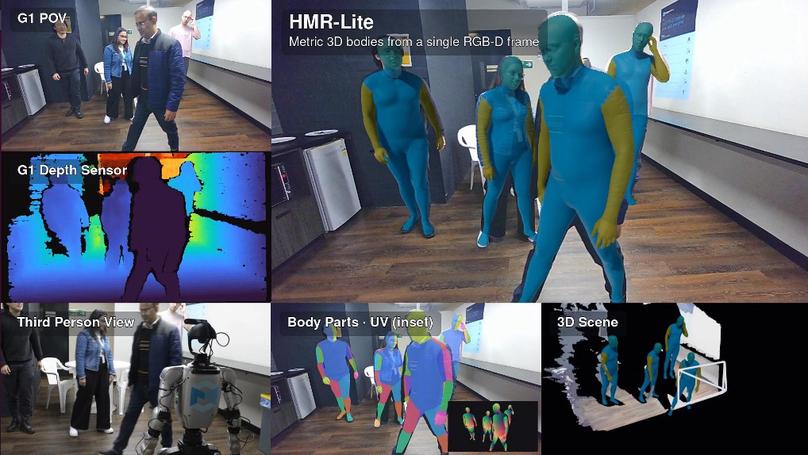
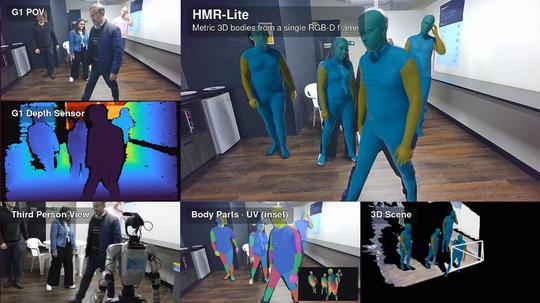
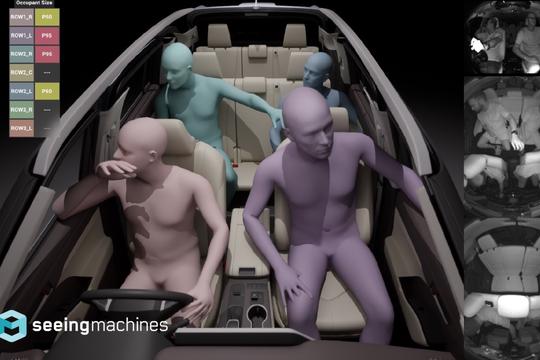
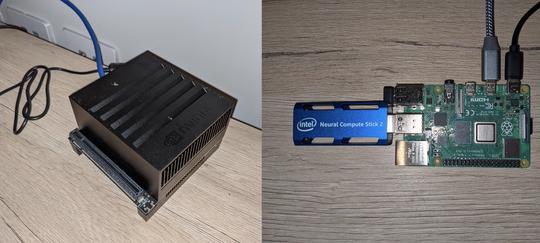
I lead the development of real-time Human Mesh Recovery (HMR) and human-understanding technologies, combining 3D geometry, human body modelling, multimodal learning, and efficient on-device inference. I enjoy setting technical direction, developing novel ML architectures, and translating research into real-time embedded systems, integrated perception platforms, and high-profile product demonstrations — including the Interior Perception Map showcased at CES 2026. Our latest work, Seeing Machines HMR, recovers state-of-the-art 3D human meshes at up to 180 FPS on NVIDIA Jetson Thor, giving robots a real-time understanding of the people around them.
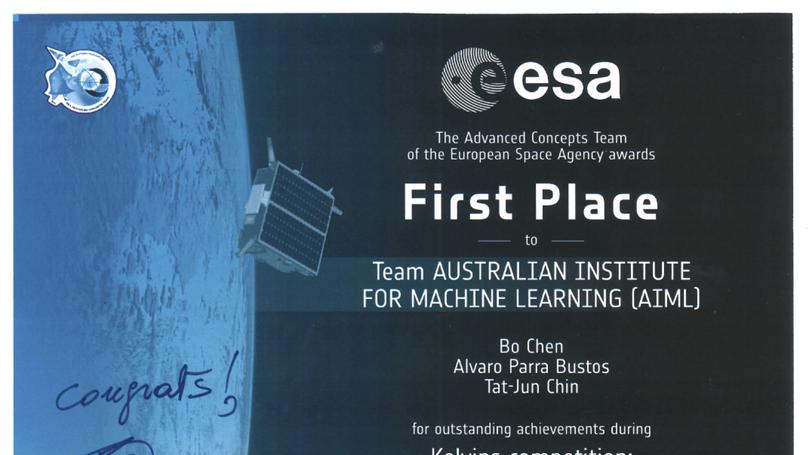
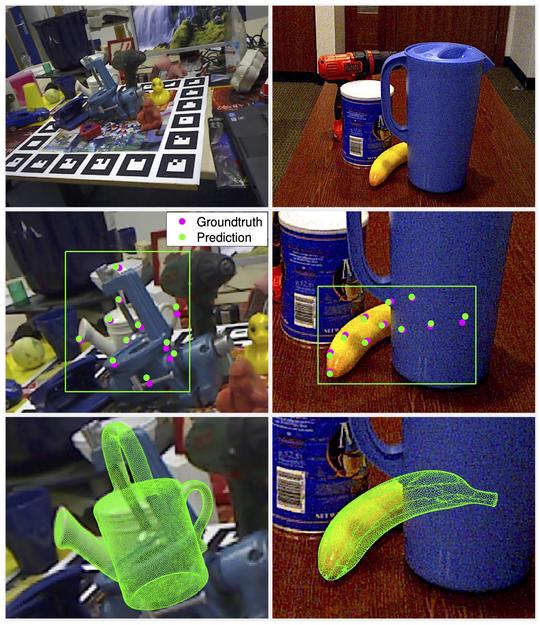
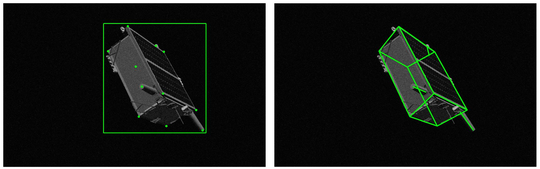
Previously, I was a Research Fellow at the Australian Institute for Machine Learning, The University of Adelaide, working on 6D object pose estimation, differentiable geometric optimization, adversarial machine learning, and efficient edge AI. Our team won two back-to-back first-place outcomes in the European Space Agency’s global satellite pose estimation competitions.
I also serve as a peer reviewer for IEEE TPAMI, CVPR, ICCV, AAAI, ACM Multimedia, IJCAI, ICRA, ICDM, WACV, and IEEE Access.
- Human-Centered 3D Perception
- Human Mesh Recovery
- Physical AI & Robotics
- 3D Vision & Geometry
- Efficient On-Device AI
-
PhD in Artificial Intelligence, 2018
Monash University
-
MSc in Statistics, 2014
The University of Queensland
-
Bachelor of Management in E-Commerce, 2006
Sun Yat-Sen University
News
- Oct 2026 — 🤖 Our technical paper Seeing Machines HMR: Real-time 3D Human Mesh Recovery at up to 180 FPS on NVIDIA Jetson Thor is out. HMR is more accurate than Meta’s SAM-3D-Body and runs ~33× faster on the embedded device. Blog · Video
- Jan 2026 — 🚗 Seeing Machines' next-generation 3D Cabin Perception Mapping platform, including our multi-view 3D occupant reconstruction, was demonstrated at CES 2026. Blog
- 2023 — 📄 Satellite Pose Estimation Competition 2021: Results and analyses published in Acta Astronautica.
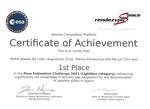
- 2022 — 🏆 1st and 3rd place in the ESA Pose Estimation 2021 AI Competition, across its two dataset categories.
- Feb 2022 — Joined the Core AI team at Seeing Machines.
- 2019 — 🏆 First place in the ESA Kelvins Satellite Pose Estimation Challenge.
Experience
- Human Mesh Recovery for Physical AI: Led the development of a real-time HMR system for Physical AI and robotics, driving model architecture, technical direction, and performance optimization. Developed geometry-aware and semantics-driven architectures that outperformed Meta’s then-state-of-the-art SAM-3D-Body in accuracy while running ~33× faster, at 15.8 ms on NVIDIA Jetson Thor (HMR-Lite: 5.5 ms, up to 180 FPS). Published as a technical paper with a Unitree G1 humanoid demo.
- Human understanding for robotics: Extended human-understanding technology beyond in-cabin perception toward Physical AI applications, including human-aware navigation, teleoperation, and robot-environment interaction. Authored a strategic whitepaper defining the technical direction for Seeing Machines' human-centered AI capabilities.
- Interior Perception Map (IPM): Led the human-understanding component of Seeing Machines' next-generation unified perception architecture demonstrated at CES 2026 (blog), introducing multi-view occupant reconstruction for detailed 3D human modelling within a holistic cabin digital twin.
- End-to-end system delivery: Key technical contributions across perception architecture, model development, system integration, synthetic-data-driven development, and real-time optimization.
- Broader Core AI: Led and contributed to initiatives spanning robust 3D perception, multimodal-LLM temporal grounding, video anomaly detection using normalizing flows, synthetic-data generation, and LLM bias calibration.
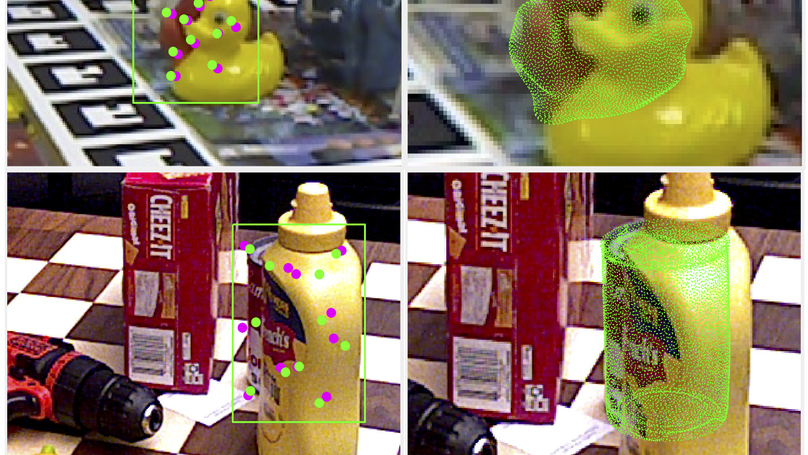
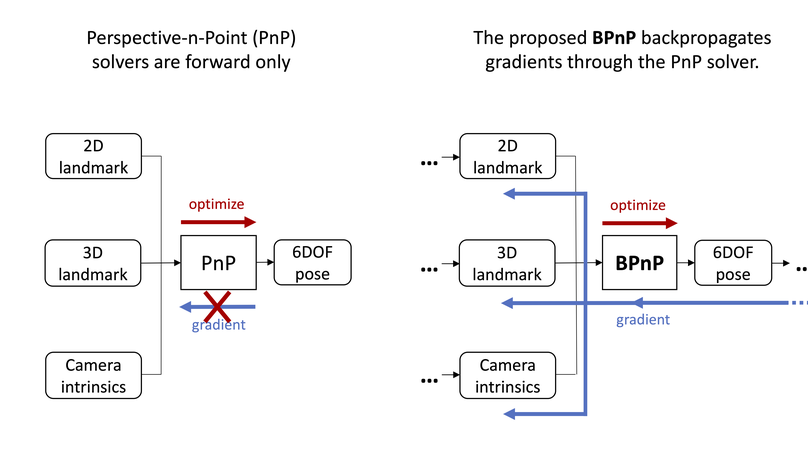
- 3D vision and machine learning research: Developed novel methods in 6D object pose estimation, differentiable geometric optimization, adversarial machine learning, and efficient edge AI.
- Competitive research: Achieved two back-to-back first-place outcomes in global AI competitions organized by the European Space Agency (ESA) for satellite pose estimation.
- Research leadership and mentorship: Supervised and mentored PhD and MPhil students across problem formulation, algorithm development, experimentation, evaluation, and publication.
- Taught postgraduate data science and machine learning, covering Python, R, statistical modelling, classical machine learning, and neural networks.
Awards
Featured Publications
Publications
Projects

Contact
- g55kern@gmail.com
- Canberra, ACT